U .S. forces disabled two Iranian-flagged oil tankers in the Gulf of Oman on May 8 after officials said the vessels attempted to enter an Iranian port in breach of the ongoing U.S. blockade.
The vessels, identified as M/T Sea Star III and M/T Sevda, were described as unladen oil tankers.
According to U.S. Central Command, both ships were stopped before reaching port, marking another escalation in Washington’s enforcement campaign around Iranian maritime traffic.
Navy Aircraft Used Precision Strikes to Stop the Vessels
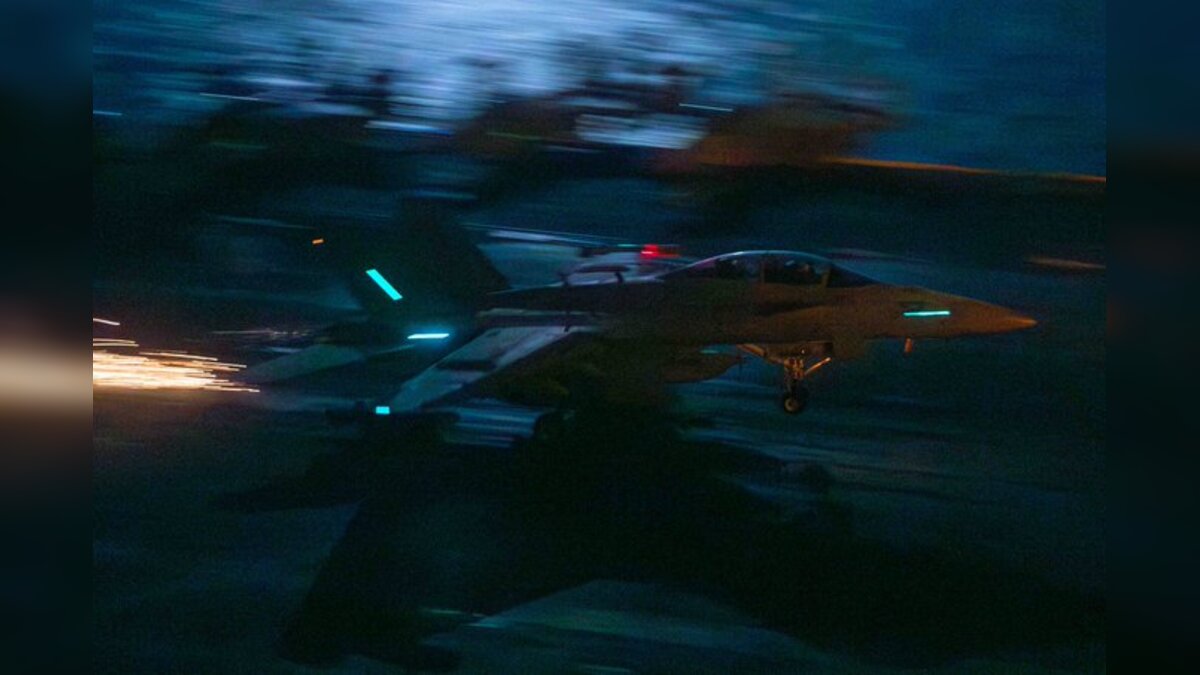
CENTCOM said the operation was carried out by a U.S. Navy F/A-18 Super Hornet operating from the aircraft carrier USS George H.W. Bush (CVN 77).
The aircraft reportedly fired precision munitions into the smokestacks of both vessels, disabling them without allowing the tankers to continue their approach toward Iran.
U.S. officials said the ships were non-compliant with blockade restrictions and were prevented from entering the Iranian port.
Earlier Tanker Disabled in Separate May 6 Operation
The May 8 action followed a similar operation two days earlier, when U.S. forces disabled the Iranian-flagged M/T Hasna as it attempted to sail toward an Iranian port in the Gulf of Oman.
In that case, CENTCOM said an F/A-18 Super Hornet from the USS Abraham Lincoln (CVN 72) fired multiple 20mm cannon rounds at the tanker’s rudder, stopping the unladen vessel from continuing its transit.
With the latest action, all three vessels — M/T Sea Star III, M/T Sevda, and M/T Hasna — are no longer moving toward Iran.
CENTCOM Says Blockade Enforcement Will Continue
Adm. Brad Cooper, commander of U.S. Central Command, said American forces in the region remain focused on enforcing the blockade against ships attempting to enter or leave Iran.
He praised U.S. service members involved in the operations, saying they were carrying out the mission with professionalism and skill.
CENTCOM said its forces have now disabled multiple commercial vessels and redirected more than 50 others as part of efforts to ensure compliance with the blockade.
Impact and Consequences
The disabling of three Iranian-flagged vessels in a matter of days signals a tougher U.S. posture in the Gulf of Oman, a strategically sensitive waterway connected to global oil shipping routes.
The operations are likely to heighten tensions with Iran, especially as U.S. forces move from redirecting commercial vessels to physically disabling ships accused of violating the blockade.
The use of carrier-based aircraft against tankers also raises the stakes for maritime operators in the region, as commercial vessels attempting to approach Iranian ports could face direct military intervention.
For shipping companies, insurers, and regional governments, the incidents may increase uncertainty around tanker movements near Iran and the Gulf of Oman.
What’s next?
U.S. forces are expected to continue monitoring maritime traffic around Iran and enforcing the blockade against vessels attempting to enter or leave Iranian ports.
Further encounters may occur if additional ships refuse to comply with U.S. instructions or attempt to bypass blockade measures.
Iran’s response will be closely watched, as any retaliation or countermeasure could further escalate the confrontation in one of the world’s most important maritime corridors.
Summary
U.S. Central Command said American forces disabled two more Iranian-flagged oil tankers, M/T Sea Star III and M/T Sevda, on May 8 before they could enter an Iranian port in the Gulf of Oman.
The action followed the May 6 disabling of M/T Hasna.
CENTCOM said all three vessels are no longer transiting to Iran, while more than 50 other commercial ships have been redirected as part of the blockade enforcement effort.
Bulleted Takeaways
- U.S. forces disabled M/T Sea Star III and M/T Sevda on May 8.
- CENTCOM said both Iranian-flagged tankers were attempting to enter an Iranian port in violation of the blockade.
- A Navy F/A-18 Super Hornet from USS George H.W. Bush struck the vessels’ smokestacks with precision munitions.
- The May 8 operation followed the May 6 disabling of M/T Hasna by an F/A-18 from USS Abraham Lincoln.
- CENTCOM said all three tankers are no longer transiting toward Iran.
- U.S. officials said multiple commercial vessels have been disabled and more than 50 redirected under blockade enforcement measures.