Author: tdpel

  • U.S. Army Confirms Officer Found Dead in Morocco After Off-Duty Cliff Fall Sparks Massive Military Search

    U.S. Army Confirms Officer Found Dead in Morocco After Off-Duty Cliff Fall Sparks Massive Military Search

    The body of a U.S. Army officer who vanished during an off-duty hike in Morocco has been found, while search teams continue looking for a second missing soldier.

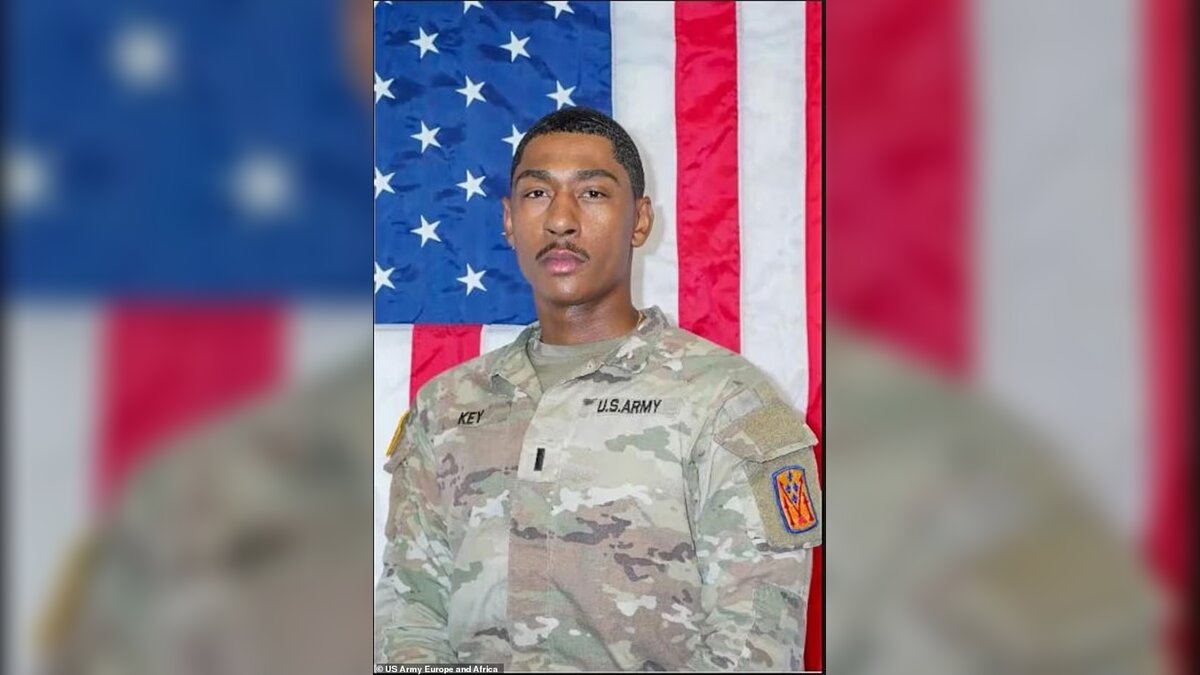
    Military officials identified the recovered soldier as 1st Lt. Kendrick Lamont Key Jr., a 27-year-old Air Defense Artillery officer.

    Search Teams Locate Remains Near Shoreline

    According to U.S. Army Europe and Africa, a Moroccan military search team discovered Key’s body in the water along the shoreline at about 8:55 a.m. local time on May 9.

    Officials said the location was roughly one mile from where both missing soldiers were believed to have entered the ocean.

    Two Soldiers Vanished After Training Exercise

    Key and another U.S. soldier were reported missing on May 2 after taking part in African Lion, a major multinational military exercise held in Morocco.

    The soldiers were off duty and on a recreational hike when they reportedly fell from a cliff near the Cap Draa Training Area, outside Tan-Tan.

    The region is known for difficult terrain, including mountains, desert areas and semidesert plains.

    Large-Scale Rescue Operation Continues

    Their disappearance triggered a major search-and-rescue effort involving more than 600 personnel from the United States, Morocco and partner militaries.

    The operation has included military vessels, frigates, helicopters and drones as teams searched both land and coastal areas.

    A U.S. defense official said American personnel remained in Morocco after the exercise ended to support command operations and continue the search for the second soldier.

    Who Was 1st Lt. Kendrick Lamont Key Jr.?

    Key was assigned to Charlie Battery, 5th Battalion, 4th Air Defense Artillery Regiment, 10th Army Air and Missile Defense Command.

    He entered the Army in 2023 as an officer candidate and earned his commission in 2024 through Officer Candidate School.

    He later completed the Basic Officer Leader Course at Fort Sill, Oklahoma. His military awards included the Army Achievement Medal and the Army Service Ribbon.

    African Lion Exercise Draws Thousands

    African Lion is a U.S.-led annual military exercise involving troops from multiple countries.

    This year’s exercise took place across Morocco, Tunisia, Ghana and Senegal, bringing together more than 7,000 personnel from over 30 nations.

    Since 2004, it has been the largest U.S. joint military exercise in Africa.

    Impact and Consequences

    Key’s death has turned a major international military exercise into a tragedy for the U.S. Army and his family.

    The incident also highlights the risks service members can face even outside combat operations, particularly in remote and hazardous terrain.

    For U.S. and Moroccan military authorities, the focus remains on recovering the second missing soldier and determining the exact circumstances of the fall.

    What’s next?

    Search-and-rescue teams will continue operations in Morocco for the second missing soldier.

    Military officials are also expected to review the incident and provide further updates as more information becomes available.

    Summary

    The body of 1st Lt. Kendrick Lamont Key Jr., a 27-year-old U.S. Army officer, has been found after he and another soldier disappeared during an off-duty hike in Morocco.

    The second soldier remains missing as U.S., Moroccan and partner forces continue search operations.

    Bulleted Takeaways:

    • U.S. Army officer Kendrick Lamont Key Jr. was found dead in Morocco.
    • He disappeared with another soldier during an off-duty hike near Tan-Tan.
    • Both soldiers reportedly fell from a cliff near the Cap Draa Training Area.
    • More than 600 personnel have joined the search operation.
    • The second U.S. soldier remains missing.
    • Key had recently been commissioned as an Air Defense Artillery officer.
    • The soldiers had participated in the African Lion military exercise.
  • Deadly MV Hondius Hantavirus Outbreak Deepens as Dutch Ornithologist Leo Schilperoord Is Identified as Patient Zero After Argentina Trip

    Deadly MV Hondius Hantavirus Outbreak Deepens as Dutch Ornithologist Leo Schilperoord Is Identified as Patient Zero After Argentina Trip

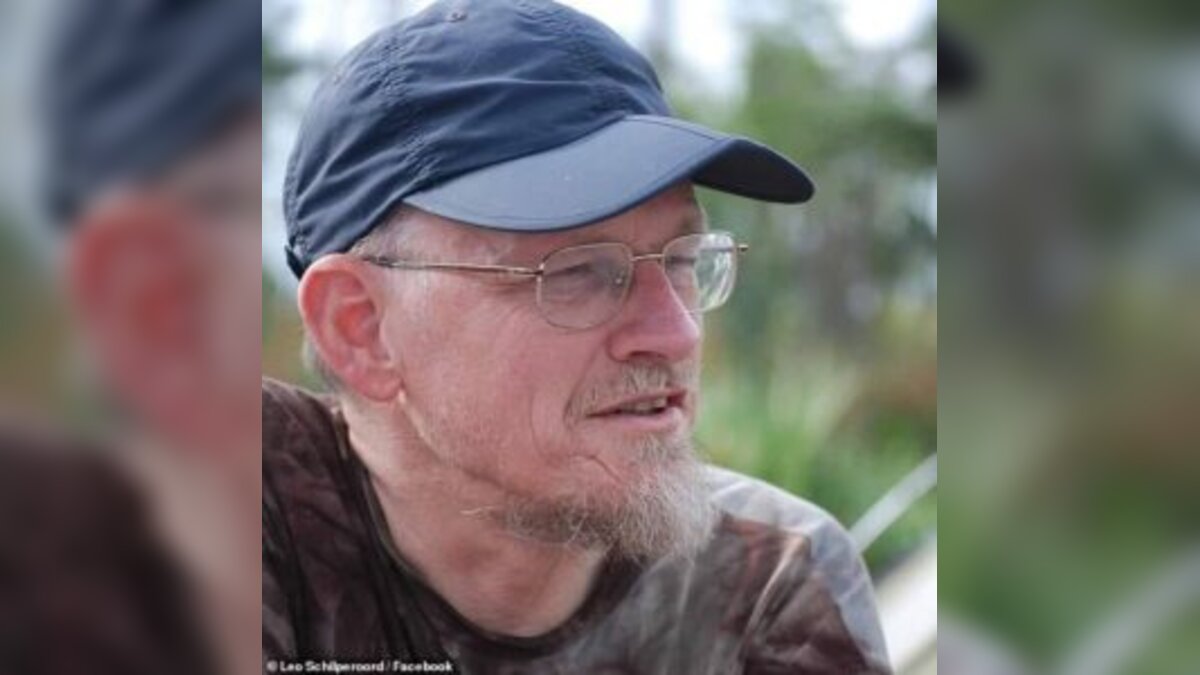
    A Dutch ornithologist has been identified as the first passenger to die in the deadly hantavirus outbreak linked to the cruise ship MV Hondius.

    Leo Schilperoord, 70, boarded the vessel with his wife Mirjam after travelling through Argentina, where the couple had gone birdwatching.

    He later became the first of three cruise ship passengers to die after contracting hantavirus.

    His widow, who had initially been comforted by fellow passengers after his death, also fell ill and later died after leaving the ship.

    Outbreak Source Now Under Fresh Scrutiny

    Initial reports suggested the infection may have been picked up at a landfill and birdwatching site in Ushuaia, at the southern tip of Argentina.

    However, new information has raised doubts about that theory.

    Officials in Tierra del Fuego have questioned claims that the virus originated in Ushuaia, saying the region has not recorded the virus and that the rodent species linked to the strain is not found there.

    Instead, attention has shifted roughly 1,500 miles north to northern Patagonia, where the couple had reportedly travelled before arriving in Ushuaia.

    Officials Point to Northern Patagonia Travel

    Juan Petrina, the director of epidemiology for Tierra del Fuego, said the couple had been in northern Patagonia about 25 to 30 days before reaching Ushuaia.

    He said that timeline better fits the known incubation period of hantavirus, which is at least a week.

    Petrina said the couple arrived in Ushuaia on March 29 and had only two full days there before boarding the MV Hondius on April 1, making it unlikely, in his view, that they contracted the virus locally.

    Andes Strain Raises Alarm

    The deadly strain involved in the outbreak is known as the Andes strain of hantavirus.

    Unlike most hantavirus variants, the Andes strain is known for its ability to spread from person to person.

    It is associated with regions including Neuquen, Rio Negro and Chubut provinces in northern Patagonia.

    Argentina’s health ministry has said the country has recorded 42 hantavirus cases so far this year, and 101 cases since last June, including 32 deaths.

    Couple’s Movements Under Investigation

    Argentine health authorities have been working with provincial health ministries to reconstruct the couple’s movements and identify the original source of the outbreak.

    The Dutch couple had also travelled to Chile before heading south to Ushuaia.

    However, Chile’s health ministry said the timing of the illness did not match their stay in Chile and stated that the couple did not contract the virus there.

    First Death Was Initially Described as Natural Causes

    Schilperoord died on board the MV Hondius on April 11.

    Passengers were reportedly told by the captain that he had died of natural causes, which led other travellers to console and embrace his grieving widow.

    Mirjam later accompanied her husband’s casket to Johannesburg, South Africa, on April 24.

    Soon after, she developed gastrointestinal symptoms. Her condition worsened rapidly, and she died in hospital on April 26.

    Passengers and Crew Face Quarantine Fears

    Authorities are now trying to trace 29 passengers who disembarked from the MV Hondius on April 24 in St. Helena, a British Overseas Territory in the South Atlantic.

    Other passengers who had been due to leave the ship in Tenerife may face quarantine for up to 45 days.

    There are reportedly 22 British passengers still on board the vessel.

    At least five people, including the ship’s British doctor, have tested positive for hantavirus. The doctor is said to be in serious condition in intensive care.

    Three additional passengers have symptoms and are awaiting confirmation through test results.

    Earlier Outbreak Shows Human-to-Human Risk

    Health authorities and the World Health Organisation have sought to avoid comparisons between the Andes strain and a Covid-style pandemic.

    However, the virus has caused serious clusters before.

    In 2018, a man in rural Chubut province attended a birthday party while ill with a fever. That event led to 34 infections and 11 deaths, making it one of the most alarming known examples of person-to-person spread.

    Gene Hackman Family Connection Renewed

    The outbreak has also drawn renewed attention to the death of Betsy Hackman, wife of Oscar-winning actor Gene Hackman, who died of hantavirus in February 2025.

    Her nephew, Tim Hackman, said he hoped those affected by the cruise ship outbreak had strong support around them.

    Betsy Hackman is believed to have contracted the virus after clearing out a rat’s nest in a shed at the couple’s New Mexico ranch. She died at home at 65, while Gene Hackman, who had advanced Alzheimer’s and heart disease, died about a week later at 95.

    Impact and Consequences

    The outbreak has created a major international health concern because passengers from the MV Hondius travelled through multiple countries before the scale of the infection became clear.

    The possibility that the first infections may have occurred in northern Patagonia rather than Ushuaia could reshape the investigation and widen the search for exposed travellers.

    The death of Schilperoord and his wife also shows how quickly hantavirus can become fatal once symptoms develop.

    For cruise operators, the case raises difficult questions about onboard illness reporting, passenger communication and how quickly suspected infectious disease cases should trigger isolation measures.

    What’s next?

    Health authorities are expected to continue tracing the movements of the Dutch couple before they boarded the MV Hondius.

    Officials will also try to contact passengers who left the ship in St. Helena and monitor those still on board or in quarantine.

    Further testing will determine whether the symptomatic passengers have hantavirus, while investigators will keep examining whether the outbreak began in northern Patagonia.

    The official source of the infection may take time to confirm because the couple travelled through several regions before boarding the ship.

    Summary

    Dutch ornithologist Leo Schilperoord, 70, has been identified as the first known victim of the deadly hantavirus outbreak linked to the MV Hondius cruise ship.

    He died on board on April 11, and his wife Mirjam later died in Johannesburg after developing symptoms.

    Although early reports pointed to a landfill site in Ushuaia, officials now say the couple may have contracted the Andes strain of hantavirus in northern Patagonia, where multiple cases and deaths have been reported.

    Several passengers and crew members remain infected or under observation.

    Bulleted Takeaways

    • Leo Schilperoord, 70, was the first passenger to die in the MV Hondius hantavirus outbreak.
    • His wife Mirjam also died after leaving the ship and travelling to Johannesburg.
    • Early claims linked the outbreak to a landfill and birdwatching site in Ushuaia, Argentina.
    • Tierra del Fuego officials now say the couple likely contracted the virus in northern Patagonia.
    • The strain involved is the Andes strain, which can spread between humans.
    • Argentina has recorded 101 hantavirus cases since last June, including 32 deaths.
    • Authorities are tracing 29 passengers who left the ship in St. Helena.
    • 22 British passengers reportedly remain on board the MV Hondius.
    • At least five people, including the ship’s British doctor, have tested positive.
    • Some passengers may face quarantine for up to 45 days.
    • Investigators are still working to confirm the true source of the outbreak.
  • Betty Broderick Dies in California Prison After Notorious Double Murder of Ex-Husband Dan Broderick and Linda Kolkena

    Betty Broderick Dies in California Prison After Notorious Double Murder of Ex-Husband Dan Broderick and Linda Kolkena

    Betty Broderick, the California socialite whose bitter divorce and double-murder case became one of America’s most notorious true-crime stories, has died in prison at the age of 78.

    The California Department of Corrections confirmed that Broderick died on Friday while in state custody.

    Officials said she had been moved to a medical center weeks earlier for a higher level of care, though details about her health condition were not released.

    Authorities determined that she died of natural causes. Her official cause of death is expected to be confirmed after an autopsy.

    Infamous Double Murder Followed Bitter Divorce

    Broderick was convicted for killing her ex-husband, Dan Broderick, and his new wife, Linda Kolkena, in November 1989.

    The couple were shot while sleeping in their bed after years of conflict between Betty and Dan following the collapse of their marriage.

    The case drew national attention because it involved wealth, betrayal, divorce, custody disputes and a killing that Broderick later framed as the result of years of emotional abuse.

    Marriage Collapsed After Affair Allegations

    Betty and Dan Broderick married in 1969 and had four children together.

    Dan later built a successful career after graduating from Cornell medical school and Harvard law school, eventually becoming a prominent medical-malpractice lawyer.

    Their relationship began to unravel in the 1980s. Betty accused Dan of having an affair with Linda Kolkena, a former flight attendant who had been hired by Dan as a legal assistant.

    Dan denied the affair during the marriage but later acknowledged the relationship after the divorce process began.

    Divorce Battle Became Intensely Hostile

    Dan and Betty filed for divorce in 1985 after 19 years of marriage.

    The split became deeply contentious, with the former couple fighting over custody of their children, finances and the family home. Dan was eventually granted custody.

    The dispute pushed Betty into an increasingly unstable and resentful state, according to accounts of the case. Her anger escalated into harassment and destructive behavior directed at Dan and Linda.

    Broderick’s Rage Escalated Before the Killings

    In the years before the murders, Broderick carried out a series of hostile acts against her ex-husband and his new partner.

    She was accused of damaging property, defacing the former family home, driving her car into Dan’s front door and leaving obscene messages on his answering machine.

    She also reportedly told her children several times that she would kill their father.

    Dan responded by seeking legal protection. Broderick was arrested, placed in a mental facility at one stage, and became subject to a restraining order that barred her from entering his property.

    Fatal Shooting Happened Months After Dan Remarried

    Dan married Linda Kolkena in 1989, several years after the divorce process began.

    Tensions between the newlyweds and Betty continued after the wedding.

    On November 5, 1989, about seven months after Dan and Linda married, Broderick entered their home at around 5 a.m. and shot both of them dead in their bedroom.

    The murders became the defining act in a case that had already drawn attention for its bitter personal and legal conflict.

    Conviction and Life Sentence

    Broderick was convicted in 1991 of two counts of second-degree murder.

    She was sentenced to 15 years to life in prison and spent the rest of her life behind bars.

    Over the years, she made several attempts to secure parole, but each request was denied.

    In 2017, San Diego County Deputy District Attorney Richard Sachs described her as defiant and completely unrepentant.

    Broderick Continued to Defend Herself

    Even from prison, Broderick continued to argue that her actions were connected to domestic abuse and the way she had been treated during her marriage and divorce.

    In one letter connected to a podcast, she reportedly described herself as a “political prisoner” and portrayed the killings as the result of abuse.

    Prosecutors and parole officials, however, repeatedly rejected her attempts to justify the murders and denied her release.

    Secret Letters Revealed Prison Relationship

    In 2020, secret letters written by Broderick to her boyfriend, Bradley Wright, were revealed after being found in a storage unit in San Diego.

    Wright had been dating Broderick before the murders and was reportedly the person who discovered the bodies of Dan and Linda.

    The letters, dated between 2003 and 2006, showed Broderick asking Wright for affection, money and visits while she was incarcerated.

    The correspondence also included romantic messages, complaints about his relationship with another woman and requests for him to come see her in prison.

    Impact and Consequences

    Broderick’s death closes the final chapter of a case that remained controversial for decades.

    To some, she was remembered as a calculating killer who murdered two people after refusing to accept the end of her marriage.

    To others, the case became a symbol of divorce rage, emotional collapse and a woman who claimed she had been broken by years of mistreatment.

    The murders devastated two families, left four children without their father, and turned Broderick into one of the most discussed figures in American true crime.

    Her repeated parole denials also showed that authorities never accepted her claims of remorse or justification as sufficient grounds for release.

    What’s next?

    An autopsy is expected to determine Broderick’s official cause of death, although prison officials have already said she died from natural causes.

    Her death is likely to renew public attention on the case, including the divorce, the affair, the killings and the long-running debate over whether Broderick was a victim, a murderer, or both in the eyes of those who followed the story.

    The prison system is expected to release final medical findings once the autopsy process is completed.

    Summary

    Betty Broderick has died in a California prison at 78 after serving decades for the 1989 murders of her ex-husband, Dan Broderick, and his new wife, Linda Kolkena. Broderick shot the couple in their bed after years of conflict linked to divorce, custody, money and Dan’s affair with Kolkena. She was convicted of two counts of second-degree murder in 1991 and sentenced to 15 years to life. Her parole requests were repeatedly denied, and she died in custody from natural causes.

    Bulleted Takeaways

    • Betty Broderick died in a California prison at age 78.
    • Officials said she died from natural causes.
    • She had been moved to a medical center weeks earlier for a higher level of care.
    • Broderick murdered her ex-husband Dan Broderick and his new wife Linda Kolkena in 1989.
    • Dan had an affair with Kolkena after years of marriage to Betty.
    • Betty and Dan divorced after 19 years of marriage.
    • Their divorce involved bitter fights over custody, property and finances.
    • Broderick was convicted in 1991 of two counts of second-degree murder.
    • She was sentenced to 15 years to life in prison.
    • Her parole requests were repeatedly denied.
    • Secret prison letters later revealed her continued relationship with boyfriend Bradley Wright.
    • Her official cause of death will be released after an autopsy.
  • Meta Sparks Employee Revolt After AI Tracking Software Monitors Workers’ Clicks and Keystrokes on Company Laptops

    Meta Sparks Employee Revolt After AI Tracking Software Monitors Workers’ Clicks and Keystrokes on Company Laptops

    Meta is facing internal backlash after employees reacted angrily to a new workplace tracking system designed to help train the company’s AI assistants.

    The system, announced in an internal post last month, allows artificial intelligence tools to observe how workers use their company laptops during daily tasks, including clicks and keystrokes.

    According to the internal announcement cited in reports, Meta said the goal was to give AI agents real examples of how people complete ordinary computer-based work.

    Staff Fear They Are Training Their Own Replacements

    The announcement sparked hundreds of emotional reactions from employees, including angry and shocked emojis.

    Several staff members reportedly raised concerns that the technology could eventually be used to replace them, with some saying they felt they were being asked to help build the very AI systems that might make their jobs unnecessary.

    One engineering manager reportedly wrote that the system made them deeply uncomfortable and asked how employees could opt out.

    Meta CTO Says Workers Cannot Opt Out on Company Laptops

    Meta Chief Technology Officer Andrew Bosworth responded that workers would not be allowed to opt out of the program on company-issued laptops.

    His response triggered further frustration among employees. One anonymous staff member reportedly accused Bosworth of showing a lack of concern for employee fears.

    Other workers questioned whether collecting detailed information about employee behavior could create a security risk, especially if sensitive internal data were included in the training process.

    Company Says Data Is Tightly Controlled

    Bosworth defended the program, saying the data would be tightly controlled and would not create a leak risk.

    Meta spokesperson Tracy Clayton also said the tracking system was created only to improve AI products. He said safeguards were in place to protect sensitive content and that the data would not be used for any other purpose.

    The company has also maintained that the system is not intended for surveillance, performance tracking or employee monitoring.

    Zuckerberg Expands Meta’s AI Push

    The dispute comes as Mark Zuckerberg continues to push Meta deeper into artificial intelligence.

    Meta has invested heavily in AI in recent years and has integrated AI features across products such as Facebook and Instagram.

    Zuckerberg has described AI as one of the most competitive fields in history, and the company’s roughly 78,000 employees have been encouraged to adapt to changing AI-focused workplace policies.

    Layoff Plans Add to Employee Anxiety

    The controversy has been intensified by separate reports that Meta plans to reduce its workforce by about 10 percent to help offset major investments, including spending on AI.

    Meta’s head of human resources, Janelle Gale, reportedly told employees that the workforce changes were meant to balance other investments the company is making.

    She acknowledged that the waiting period before the cuts would leave workers facing uncertainty and anxiety. Employees reportedly said the layoffs were expected to take effect on May 20.

    Impact and Consequences

    The tracking system has deepened concerns among Meta employees already worried about job security, layoffs and the growing role of AI inside the company.

    For workers, the biggest fear is not simply that AI will be used to improve productivity, but that their own work habits could be used to train systems capable of replacing them.

    The dispute also raises broader questions about workplace consent, data privacy and the limits of employer control over company devices.

    For Meta, the backlash shows the challenge of aggressively pursuing AI development while trying to maintain trust among employees who may feel exposed, monitored or expendable.

    What’s next?

    Meta is expected to continue investing heavily in AI and expanding the use of AI tools across its platforms and internal operations.

    However, employee resistance may force the company to provide more clarity on what data is collected, how it is protected and whether it could influence future workforce decisions.

    The expected layoffs could further inflame tensions if workers believe AI investments are directly tied to job cuts.

    Summary

    Meta employees reacted angrily after the company announced a new AI training system that can track clicks and keystrokes on company laptops.

    The tool is meant to help AI agents learn how workers complete everyday computer tasks, but staff members raised fears about privacy, surveillance and job replacement.

    Meta executives said the data is protected and not being used for performance monitoring, but the backlash comes as the company pushes deeper into AI and prepares for reported workforce reductions.

    Bulleted Takeaways

    • Meta introduced an internal AI tracking system for company laptops.
    • The software can follow employee clicks and keystrokes during work tasks.
    • The company says the goal is to train AI assistants on real workplace examples.
    • Employees reacted with anger, concern and fear in internal comments.
    • Some workers said they felt they were training their own AI replacements.
    • Meta CTO Andrew Bosworth said employees cannot opt out on company laptops.
    • Meta says the data is tightly controlled and not used for surveillance or performance tracking.
    • The backlash comes as Meta continues investing heavily in artificial intelligence.
    • Reported layoffs have added to anxiety among employees.
    • The controversy raises questions about workplace privacy, consent and AI-driven job displacement.
  • U.S. Forces Disable Two Iranian-Flagged Oil Tankers Before They Reach Port in the Gulf of Oman Blockade Showdown

    U.S. Forces Disable Two Iranian-Flagged Oil Tankers Before They Reach Port in the Gulf of Oman Blockade Showdown

    U .S. forces disabled two Iranian-flagged oil tankers in the Gulf of Oman on May 8 after officials said the vessels attempted to enter an Iranian port in breach of the ongoing U.S. blockade.

    The vessels, identified as M/T Sea Star III and M/T Sevda, were described as unladen oil tankers.

    According to U.S. Central Command, both ships were stopped before reaching port, marking another escalation in Washington’s enforcement campaign around Iranian maritime traffic.

    Navy Aircraft Used Precision Strikes to Stop the Vessels

    CENTCOM said the operation was carried out by a U.S. Navy F/A-18 Super Hornet operating from the aircraft carrier USS George H.W. Bush (CVN 77).

    The aircraft reportedly fired precision munitions into the smokestacks of both vessels, disabling them without allowing the tankers to continue their approach toward Iran.

    U.S. officials said the ships were non-compliant with blockade restrictions and were prevented from entering the Iranian port.

    Earlier Tanker Disabled in Separate May 6 Operation

    The May 8 action followed a similar operation two days earlier, when U.S. forces disabled the Iranian-flagged M/T Hasna as it attempted to sail toward an Iranian port in the Gulf of Oman.

    In that case, CENTCOM said an F/A-18 Super Hornet from the USS Abraham Lincoln (CVN 72) fired multiple 20mm cannon rounds at the tanker’s rudder, stopping the unladen vessel from continuing its transit.

    With the latest action, all three vessels — M/T Sea Star III, M/T Sevda, and M/T Hasna — are no longer moving toward Iran.

    CENTCOM Says Blockade Enforcement Will Continue

    Adm. Brad Cooper, commander of U.S. Central Command, said American forces in the region remain focused on enforcing the blockade against ships attempting to enter or leave Iran.

    He praised U.S. service members involved in the operations, saying they were carrying out the mission with professionalism and skill.

    CENTCOM said its forces have now disabled multiple commercial vessels and redirected more than 50 others as part of efforts to ensure compliance with the blockade.

    Impact and Consequences

    The disabling of three Iranian-flagged vessels in a matter of days signals a tougher U.S. posture in the Gulf of Oman, a strategically sensitive waterway connected to global oil shipping routes.

    The operations are likely to heighten tensions with Iran, especially as U.S. forces move from redirecting commercial vessels to physically disabling ships accused of violating the blockade.

    The use of carrier-based aircraft against tankers also raises the stakes for maritime operators in the region, as commercial vessels attempting to approach Iranian ports could face direct military intervention.

    For shipping companies, insurers, and regional governments, the incidents may increase uncertainty around tanker movements near Iran and the Gulf of Oman.

    What’s next?

    U.S. forces are expected to continue monitoring maritime traffic around Iran and enforcing the blockade against vessels attempting to enter or leave Iranian ports.

    Further encounters may occur if additional ships refuse to comply with U.S. instructions or attempt to bypass blockade measures.

    Iran’s response will be closely watched, as any retaliation or countermeasure could further escalate the confrontation in one of the world’s most important maritime corridors.

    Summary

    U.S. Central Command said American forces disabled two more Iranian-flagged oil tankers, M/T Sea Star III and M/T Sevda, on May 8 before they could enter an Iranian port in the Gulf of Oman.

    The action followed the May 6 disabling of M/T Hasna.

    CENTCOM said all three vessels are no longer transiting to Iran, while more than 50 other commercial ships have been redirected as part of the blockade enforcement effort.

    Bulleted Takeaways

    • U.S. forces disabled M/T Sea Star III and M/T Sevda on May 8.
    • CENTCOM said both Iranian-flagged tankers were attempting to enter an Iranian port in violation of the blockade.
    • A Navy F/A-18 Super Hornet from USS George H.W. Bush struck the vessels’ smokestacks with precision munitions.
    • The May 8 operation followed the May 6 disabling of M/T Hasna by an F/A-18 from USS Abraham Lincoln.
    • CENTCOM said all three tankers are no longer transiting toward Iran.
    • U.S. officials said multiple commercial vessels have been disabled and more than 50 redirected under blockade enforcement measures.
  • IDF Eliminates Hamas Paramedic Accused of Helping Abduct Mia Schem Near Mefalsim During October 7 Attack

    IDF Eliminates Hamas Paramedic Accused of Helping Abduct Mia Schem Near Mefalsim During October 7 Attack

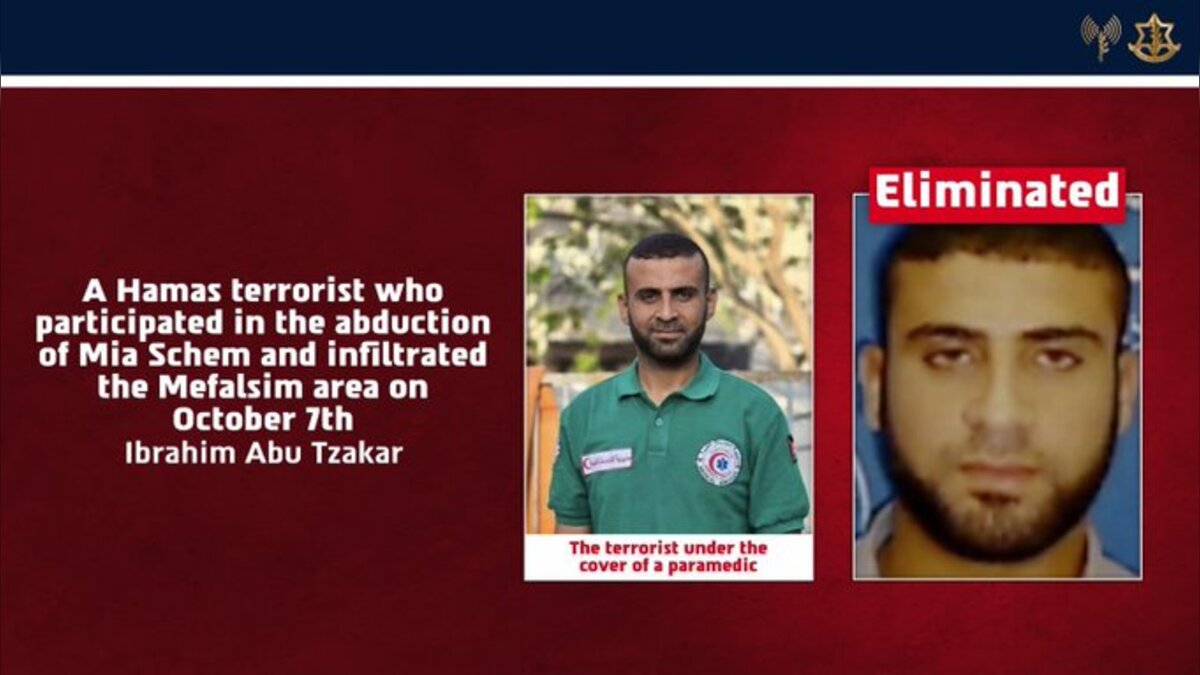
    The Israel Defense Forces said it has eliminated Ibrahim Abu Tzakar, whom it identified as a Hamas operative accused of taking part in attacks against Israeli forces and civilians.

    According to the IDF, Abu Tzakar had operated under the cover of a paramedic while also being involved in militant activity. The military alleged that he helped lead multiple attacks targeting IDF troops and Israeli civilians.

    Accused Role in the October 7 Attack

    The IDF said Abu Tzakar crossed into Israel during the October 7 massacre and was involved in the abduction of Mia Schem from the area near Mefalsim.

    Schem was among those taken hostage during the Hamas-led assault on southern Israel, an attack that triggered the ongoing war in Gaza and remains central to Israel’s military campaign against Hamas.

    Impact and Consequences

    The IDF’s announcement frames Abu Tzakar’s killing as part of its wider effort to pursue individuals it says were directly involved in the October 7 attacks.

    The allegation that he operated as a paramedic while participating in armed activity is likely to add further tension to debates over the use of civilian or medical roles in conflict zones.

    What’s next?

    Israel is expected to continue targeting Hamas figures it accuses of involvement in the October 7 assault, especially those linked to hostage abductions and attacks on civilians.

    Further details may emerge from the IDF regarding the circumstances of Abu Tzakar’s killing, including where and how the operation took place.

    Summary

    The IDF announced that Ibrahim Abu Tzakar, described by Israel as a Hamas terrorist and paramedic, was killed.

    The military accused him of helping lead attacks against Israeli troops and civilians and said he was involved in Mia Schem’s abduction near Mefalsim during the October 7 attack.

    Bulleted Takeaways

    • The IDF said Ibrahim Abu Tzakar has been eliminated.
    • Israel identified him as a Hamas operative who also worked as a paramedic.
    • The military accused him of leading attacks against IDF troops and Israeli civilians.
    • The IDF said he entered Israel during the October 7 massacre.
    • Abu Tzakar was accused of participating in the abduction of Mia Schem near Mefalsim.
  • TOWIE Star Jake Hall Dies In Majorca Villa Accident After Reportedly Crashing Through Glass Doors In Spain

    TOWIE Star Jake Hall Dies In Majorca Villa Accident After Reportedly Crashing Through Glass Doors In Spain

    Jake Hall, the British reality TV personality best known for his time on The Only Way Is Essex, has died in Spain at the age of 35.

    Hall reportedly suffered fatal head injuries following an accident at a villa in Majorca. According to a report cited by the New York Post, the former reality star crashed through glass doors during the incident.

    Authorities Investigate Majorca Villa Accident

    Spain’s Civil Guard has opened an investigation into the circumstances surrounding Hall’s death.

    Officials said the incident currently “appears to be an accidental death,” though authorities are still reviewing what happened.

    The UK’s Foreign, Commonwealth & Development Office also confirmed that it was assisting Hall’s family and communicating with Spanish officials.

    “We are supporting the family of a British man who has died in Spain and are in contact with the local authorities,” a spokesperson told BBC News.

    Officials later confirmed the man was Hall.

    Hall Rose To Fame On TOWIE

    Hall became known to television viewers after joining ITV’s long-running reality series The Only Way Is Essex in 2015.

    Alongside his reality TV career, he also worked in fashion as a model and designer.

    During his time in the public eye, Hall was also known for his past relationship with fellow TOWIE cast member Chloe Lewis.

    TOWIE Pays Tribute

    Following news of his death, The Only Way Is Essex released a statement honoring Hall and offering condolences to those close to him.

    “Jake was a part of the TOWIE family for a number of years and we send our very deepest sympathies to his family and friends following today’s very sad news,” the show said.

    The tribute reflected Hall’s connection to the reality series and the wider community of cast members who appeared alongside him.

    Another Loss Connected To The Show

    Hall’s death is the second tragedy linked to The Only Way Is Essex this year.

    In March, fellow cast member Jordan Wright was found dead in Thailand. According to local reports, Wright’s body was discovered inside a concrete drainage system on the island of Phuket.

    The two deaths have brought renewed attention to former members of the ITV reality show and the personal tragedies connected to its cast.

    Family And Survivors

    Hall is survived by his daughter.

    Her mother is Missé Beqiri, who is known for appearing on Ladies of London and The Real Housewives of Cheshire.

    No further family statement was included in the provided report.

    Impact and Consequences

    Hall’s death has shocked fans of The Only Way Is Essex and those who followed his career after his appearance on the show.

    The incident also places attention on the ongoing investigation in Spain, as authorities work to confirm the full circumstances behind the fatal accident.

    For Hall’s family, friends, and young daughter, the loss is deeply personal and sudden.

    What’s Next?

    Spanish authorities are continuing to investigate the incident at the Majorca villa.

    The UK Foreign Office remains in contact with local authorities and is supporting Hall’s family as they deal with the aftermath of his death.

    More details may emerge once investigators complete their review of the accident.

    Summary

    Jake Hall, a former The Only Way Is Essex cast member, has died in Spain at 35 after reportedly suffering fatal head injuries in an accident at a villa in Majorca.

    Spanish officials say the death appears accidental, though an investigation is underway. Hall, who also worked as a model and fashion designer, is survived by his daughter.

    Bulleted Takeaways: Jake Hall Dies In Spain After Majorca Villa Accident

    • Jake Hall has died in Spain at the age of 35.
    • He was best known for appearing on The Only Way Is Essex.
    • Hall reportedly suffered fatal head injuries after crashing through glass doors at a villa in Majorca.
    • Spain’s Civil Guard has launched an investigation.
    • Authorities said the death currently appears to have been accidental.
    • The UK Foreign Office said it is supporting Hall’s family and working with local authorities.
    • The Only Way Is Essex paid tribute to Hall and sent condolences to his family and friends.
    • Hall also worked as a model and fashion designer.
    • He was previously in a relationship with TOWIE co-star Chloe Lewis.
    • Hall is survived by his daughter, whose mother is Missé Beqiri.
  • Deadly Hantavirus Cruise Sparks Alarm In U.S. As Texas And Virginia Passengers Return Home Before Outbreak Is Identified

    Deadly Hantavirus Cruise Sparks Alarm In U.S. As Texas And Virginia Passengers Return Home Before Outbreak Is Identified

    Health officials in the United States are monitoring several travelers who recently returned from a cruise ship connected to a fatal hantavirus outbreak.

    Two passengers from Texas and one from Virginia were on board the MV Hondius, a cruise vessel where multiple people later became sick and three passengers died.

    The travelers returned to the U.S. before the outbreak had been formally identified, according to state health authorities.

    Texas officials said both Texans are currently well and have not reported symptoms.

    Texas Health Officials Say Two Passengers Are Symptom-Free

    The Texas Department of State Health Services said Thursday that the two Texas passengers did not have contact with anyone who was visibly ill while on the MV Hondius.

    Both have agreed to watch for symptoms and take their temperatures every day.

    State officials said the travelers will contact public health authorities immediately if they notice any possible signs of illness.

    Virginia Also Monitoring One Returned Traveler

    The Virginia Department of Health is also keeping watch over one traveler who had been on the cruise and later returned home, according to 13 News Now.

    As of Thursday, that passenger was reportedly in good health and had no symptoms of hantavirus infection.

    The monitoring is precautionary, as symptoms can take time to appear after exposure.

    Other U.S. States Are Watching Possible Exposures

    American officials were already monitoring people in Arizona, California, and Georgia as of Wednesday.

    Officials have confirmed that two Georgia residents and one Arizona resident are under observation. California officials are also monitoring an unspecified number of people.

    The Centers for Disease Control and Prevention said Wednesday night that it is working with the State Department to track the status of U.S. passengers connected to the cruise.

    “The Department of State is leading a coordinated, whole-of-government response including direct contact with passengers, diplomatic coordination, and engagement with domestic and international health authorities,” the CDC said.

    Deadly Outbreak Began During MV Hondius Voyage

    So far, three passengers have died in the outbreak, and several others have become ill.

    The first known death was a 70-year-old Dutch man who died on April 11 after several days of serious illness.

    At the time, the cause of his death was not publicly identified as hantavirus. His body was later removed from the ship on April 24 at St. Helena, a remote island in the South Atlantic.

    In a video shared with passengers, the ship’s captain, Jan Dobrogowski, said the death was believed to have been from natural causes.

    “Tragic as it is, it was due to natural causes, we believe,” Dobrogowski said. “And also whatever health issues he was struggling with, I’m told by the doctor, were not infectious, so the ship is safe when it comes to that.”

    He added: “The ship is safe. This gentleman, unfortunately, succumbed to natural causes. And like I say, we do what we can in order to continue in a safe and dignified way.”

    Cruise Company Says Dozens Left The Ship At St. Helena

    Oceanwide Expeditions, the Netherlands-based company that operates the MV Hondius, said Thursday that 30 passengers got off the vessel at St. Helena.

    The company also revealed that six Americans disembarked there on April 24, nearly two weeks after the first passenger died on board.

    The first confirmed hantavirus case from the ship was not announced by authorities until May 2.

    Argentine Officials Examine Possible Source Of Infection

    The MV Hondius departed from Ushuaia, Argentina, on April 1.

    Argentine authorities believe one possible source of the outbreak may have been a bird-watching trip taken by a Dutch couple at a garbage dump in Ushuaia.

    Officials suspect the couple may have contracted hantavirus there before falling ill. The Dutch man later died on the ship, while his wife left the vessel, traveled to South Africa, and died there.

    Flight Attendant In Netherlands Tested After Possible Exposure

    On Thursday, the Netherlands’ health ministry said a flight attendant who had briefly been on a plane boarded by the Dutch woman was showing symptoms consistent with hantavirus.

    The flight attendant was being tested in an isolation ward at a hospital in Amsterdam.

    If the test comes back positive, the case could mark the first known infection linked to the outbreak involving someone who was not on the cruise ship.

    How Hantavirus Spreads

    Hantavirus symptoms usually appear between one and eight weeks after exposure.

    Texas health officials said infection generally requires “close, prolonged contact with a person who is actively sick with the disease.”

    Authorities added that the virus is not known to spread through brief casual contact, such as shaking hands or being in the same room for a short time.

    They also said there have been no documented cases of someone without symptoms spreading the virus to another person.

    Impact and Consequences

    The outbreak has triggered public health monitoring across several U.S. states and raised questions about how information was handled during the cruise.

    Passengers left the MV Hondius before the outbreak was officially confirmed, meaning health officials are now working backward to identify and monitor possible exposures.

    The deaths of three passengers have also placed new attention on cruise ship health protocols, especially when serious illness occurs at sea and the cause is not immediately clear.

    For travelers who returned home, the main consequence is a period of symptom monitoring, including daily temperature checks and close contact with local health officials.

    What’s Next?

    Health departments in Texas, Virginia, Georgia, Arizona, California, and possibly other states will continue monitoring travelers who were on the MV Hondius.

    The CDC and State Department are also coordinating with domestic and international health authorities as they track U.S. passengers connected to the voyage.

    Testing in the Netherlands may determine whether the symptomatic flight attendant became infected after contact with the Dutch woman who later died.

    More information is expected as health agencies investigate how the outbreak began, who may have been exposed, and whether additional cases develop.

    Summary

    Two Texans and one Virginian are being monitored after returning from the MV Hondius, a cruise ship linked to a deadly hantavirus outbreak.

    Three passengers have died, and several others have become ill. U.S. officials are also watching travelers in Arizona, California, and Georgia.

    Health officials say the monitored passengers in Texas and Virginia are currently healthy and showing no symptoms.

    Authorities continue to investigate the outbreak’s origin, with Argentine officials examining whether a bird-watching trip in Ushuaia may have played a role.

    Bulleted Takeaways: U.S. Passengers Monitored After Deadly Hantavirus Outbreak On MV Hondius Cruise

    • Two passengers from Texas and one from Virginia returned from the MV Hondius before the hantavirus outbreak was identified.
    • Texas officials said both travelers are symptom-free and had no contact with sick passengers.
    • The Virginia traveler is also reportedly healthy and under monitoring.
    • Three cruise passengers have died, and several others have fallen ill.
    • U.S. officials are also monitoring people in Arizona, California, and Georgia.
    • Six Americans left the ship at St. Helena on April 24.
    • Oceanwide Expeditions said 30 passengers disembarked at St. Helena.
    • The first confirmed hantavirus case from the ship was not announced until May 2.
    • Argentine officials are investigating whether a bird-watching trip at a garbage dump in Ushuaia may have been the source.
    • A flight attendant in the Netherlands is being tested after showing possible symptoms following contact with one of the passengers.
  • Iranian Regime Executes Three Prisoners In Orumiyeh After Alleged Torture, Forced Confessions, And Denied Family Visits

    Iranian Regime Executes Three Prisoners In Orumiyeh After Alleged Torture, Forced Confessions, And Denied Family Visits

    Three men executed at Orumiyeh Central Prison in Iran were allegedly tortured, pressured into confessions, and denied final family visits before their deaths, according to letters and recorded phone calls shared with The Jerusalem Post by the Kurdistan Human Rights Network.

    The rights group said Yaghoub Karimpour, 43, Nasser Bakerzadeh, 26, and Mehrab Abdollahzadeh, 28, all managed to communicate with KHRN before they were executed.

    Karimpour and Bakerzadeh were hanged on Saturday, while Abdollahzadeh was executed on Sunday. KHRN said their relatives were not informed beforehand, despite Iranian law allowing families a final visit before execution.

    Rights Group Says Families Were Kept In The Dark

    KHRN said the men did not know they were about to be executed when Rebin Rahmani, a representative of the organization, spoke with them on the Saturday before their deaths.

    The organization also said the men’s families were later denied access to their bodies after approaching officials at Orumiyeh Central Prison.

    According to KHRN, authorities also prevented the families from holding religious memorial ceremonies.

    Yaghoub Karimpour Said He Was Forced To Confess

    Yaghoub Karimpour, a disabled Azerbaijani Turkic citizen, had been accused of passing sensitive information to a Mossad officer.

    Iran’s judiciary sentenced him to death on allegations of espionage. But KHRN and the Hengaw Organization for Human Rights said his confession came after severe physical and psychological pressure.

    In a January letter shared with The Jerusalem Post, Karimpour said interrogators threatened to intensify the torture of his wife, whose cries he said he could hear during questioning.

    “Many things were dictated to me, and I wrote untruths involuntarily and out of helplessness so that the torture and harassment of my wife would not continue,” he wrote.

    Karimpour Described Denial Of Medicine And Legal Rights

    Karimpour said he was arrested on June 16, 2025, and held for about two months in what he described as a “dark detention center of the Intelligence Ministry” before being transferred to Orumiyeh Central Prison.

    From prison, he told KHRN he had been subjected to torture for roughly two months before confessing to the charge of “Corruption on Earth” before Judge Sajjad Dousti.

    A law graduate, Karimpour said his rights were repeatedly violated. He said he was not told he had the right to a lawyer, was denied legal representation, interrogated while blindfolded, threatened with death, and tried in absentia through a video proceeding that lasted less than 15 minutes.

    He also said the indictment was changed on the day of trial to a charge carrying the death penalty.

    Karimpour denied ever having access to government secrets.

    “I have never held a position anywhere, nor have I frequented or entered government, military, or institutional centers.

    Naturally, I had no access to ordinary, confidential, or top-secret data, and I have not sent any information to any place or person; so how can they accuse me of espionage? [Ministry of] Intelligence agents want to blame their own faults and shortcomings on ordinary people; because if they were not at fault, so many commanders, scientists, and ordinary people would not have been killed in the 12-day war,” he wrote.

    Karimpour Said His Disabilities Were Used Against Him

    Karimpour said he had several serious health conditions, including complications from spinal and lung surgeries, chronic breathing issues, limited use of his limbs, and severe mental health struggles.

    He said Iranian authorities knew about his disabilities because he had received state support before his detention, but still denied him medication as a form of pressure.

    “I suffer from a severe physical disability; my entire spine has been plated, I suffer from severe shortness of breath due to surgery on my right lung, my limbs, namely my arms and legs, are incapacitated, and I suffer from a severe neurological and mental illness, and I have fear, panic, and phobia of narrow, dark, and enclosed spaces. Also, due to my skeletal deformity, severe pressure is placed on my heart,” he wrote.

    He added that panic attacks worsened his breathing problems and increased his heart rate.

    “Nervous attacks exacerbate my shortness of breath and increase my heart rate. I have medical records for each of my conditions and am under treatment.

    Despite my specific physical and mental status, I was treated like an ordinary person and subjected to various forms of torture, duress, and coercive suggestion to extract false statements dictated by the interrogator.”

    KHRN said Karimpour survived in prison largely through help from other inmates.

    Nasser Bakerzadeh Said His Case Was Reframed As Espionage

    Nasser Bakerzadeh was also accused of spying for Israel. According to audio recordings and documents he sent to KHRN, his death sentence for “spreading corruption on earth through intelligence cooperation or espionage in favor of the Zionist regime” had been overturned twice.

    In a phone call with KHRN, Bakerzadeh said plainclothes IRGC agents first came to his shop in 2023 and forced him to go with them.

    “About four or five months before I was actually arrested, in the summer of 2023, some men came to my shop in plain clothes. When I asked who they were, they didn’t answer. They were armed and told me that if I didn’t come with them, they would take me by force,” he said. “I was scared, so I closed up my shop and went with them. I got into a Persian car, and a motorcycle followed behind us. I didn’t even consider for a second that they might be from the IRGC Intelligence Organization; I had no idea who they were.”

    He said the men blindfolded him and took him to a private room, where they questioned him about a person named Hashem, with whom he said he had worked on tourism projects.

    Bakerzadeh Insisted His Work Was Tourism-Related

    Bakerzadeh said his connection to Hashem began in 2020 and involved tourism work, not military or intelligence activity.

    “Since I hadn’t done anything wrong, I spoke freely. I told them everything: in the winter of 2020, Hashem had messaged me saying he worked for a tourism company and wanted to collaborate on tourism projects. I agreed, and we ended up working together on several tourism-related jobs. That’s all it was, tourism. We never even took a photo near a military site. We were doing tourism research,” he said.

    He also said he had permission from the IRGC before taking photos of tourism locations.

    Court documents cited in the report said Bakerzadeh had claimed from the start that he did not provide information about military sites and had contacted authorities after becoming suspicious of the person he was dealing with.

    The Supreme Court also said prosecutors had not proven the alleged Mossad officer was connected to Israel.

    Bakerzadeh said the original accusation against him was “acting against national security,” but it soon changed.

    “When I was first arrested, the charge was ‘acting against national security,’ and there was no mention of Israel at all. Within two or three hours, that changed to “espionage for Israel.” They took the opportunity and completely reframed the charges against me,” he claimed.

    Bakerzadeh Said He Was Held In Solitary Confinement

    Bakerzadeh said he later agreed to help IRGC agents locate Hashem because he feared imprisonment. But he said the agents continued harassing him and even took phones belonging to his customers.

    He said the behavior made him question whether the men were truly IRGC agents, prompting him to travel to Iraqi Kurdistan for 20 days to think through the situation.

    “Every day I would call the man and say, ‘If you’re really from the IRGC Intelligence Organization, come meet me and bring my phones back.’ My plan wasn’t to flee. I went to Bashur only to figure out who these people actually were,” he told KHRN. “If they were from the IRGC Intelligence Organization, I would go back and answer their questions. I hadn’t done anything wrong. And if they weren’t, and they turned out to be just robbers, I would report them to the security forces.”

    After returning to Iran, Bakerzadeh and his father demanded the return of the phones and filed a complaint with the IRGC. He said the agent responded by obtaining an arrest warrant and accusing him of spying.

    Bakerzadeh was arrested on January 2, 2024. He said he spent three months in solitary confinement at an IRGC Intelligence unit and faced intense psychological torture.

    “They left me alone in that cell for twenty days at a time. I had lost my mind,” he said.

    Mehrab Abdollahzadeh Denied Killing A Security Officer

    Unlike the other two men, Mehrab Abdollahzadeh was not accused of spying for Israel.

    He was executed over his alleged role in the killing of security officer Abbas Fatemiyeh during the 2022 Women, Life, Freedom protests. Abdollahzadeh denied the accusation during calls with KHRN.

    “I am completely innocent, but they want to make me a scapegoat,” he said.

    He said IRGC agents came to his shop about a month after protests began following the death of 22-year-old Mahsa Amini. According to Abdollahzadeh, the agents demanded that he spy on people in his community.

    He said he refused, explaining that he was not a prominent figure and had no useful information.

    Abdollahzadeh Said He Signed A Confession Under Pressure

    Abdollahzadeh told KHRN that after he rejected the IRGC’s demands, agents physically and psychologically tortured him.

    “They then subjected me to both physical and psychological torture. They tied me to a chair and beat me for a week. When they realized I was innocent and couldn’t give them what they wanted, they switched to psychological torture. It got so bad that I started hitting my head against the wall, splitting it open in 20 to 30 places. I had lost my mind. They also gave me hallucinogenic substances to try to make me work for them,” he said. “After 30 to 40 days, they interrogated me again and showed me a video of a Basij member being killed. They told me they knew I wasn’t in the video and that I hadn’t done it.”

    He said agents promised to release him if he gave information about attacks on Basij members, but he had none to provide.

    Abdollahzadeh said he eventually signed a confession after agents abducted his girlfriend and threatened his family.

    He said he was then kept for 15 days in a tiny room measuring about two to three square meters. According to him, he was moved only after a doctor said his mental state had collapsed.

    Trial And Appeals Ended With Death Sentence

    Abdollahzadeh said that once he reached a regular prison cell, media reports about his case began circulating. But his family asked the media to stop because they believed the courts would handle the matter properly.

    “Once I was in prison, news about my situation started to appear in the media. But my family asked the media to stop, because they didn’t know any better; they believed the legal process would take care of things,” he said. “They thought the state wouldn’t convict someone for no reason. We believed that confessions made under torture would not be accepted in court and that a judge wouldn’t hand down a sentence without proper grounds. So, we hired a lawyer, and my trial took place seven to eight months later.”

    He said his trial was held across three sessions, but he was allowed to speak for less than five minutes in total.

    He was sentenced to death on September 19, 2024. His lawyers appealed after he was informed in October, but on December 18, 2025, he was told that Branch Nine of the Supreme Court had upheld the sentence. In mid-February 2026, the Supreme Court rejected his retrial request.

    Abdollahzadeh said the IRGC had pressured people who knew he was innocent to remain silent.

    “Every judge tells me to get the plaintiff’s consent. But the IRGC will not allow it. They openly want to make me the scapegoat,” he said. “They openly threaten my family. We have hired two lawyers, both of whom have written defenses and traveled to Tehran, but no one is willing to listen, and no one is hearing our voice. All they want is to make me the scapegoat.”

    He told KHRN he was speaking publicly as a last resort.

    Impact and Consequences

    The executions have intensified concerns among human rights groups over Iran’s use of torture, forced confessions, secretive judicial proceedings, and denial of family rights in death penalty cases.

    KHRN’s account suggests that all three men faced serious due process concerns before being executed. The allegations include lack of access to lawyers, coerced statements, solitary confinement, physical abuse, psychological torture, and denial of final visits.

    The cases also highlight broader fears that Iranian authorities are using security-related accusations to silence dissent, punish alleged links to foreign states, and intimidate communities after periods of protest and conflict.

    For the families, the consequences remain immediate and painful. According to KHRN, they were denied final visits, denied access to the bodies, and barred from holding religious memorial ceremonies.

    What’s Next?

    KHRN is continuing to publicize the men’s accounts and the circumstances surrounding their executions.

    Rebin Rahmani of KHRN told The Jerusalem Post that the Iranian regime has begun executing prisoners involved in security-related cases as an “act of revenge” against Israel and the United States.

    “The regime wants to spread fear and intimidation among people, so telling the people,” he said, adding that the purpose was to frighten Iranians away from protesting against the government or having any contact with Israel.

    Human rights organizations are likely to continue pressing for international attention on the cases, particularly the allegations of torture, coerced confessions, and denial of basic legal protections.

    Summary

    Three men executed at Orumiyeh Central Prison allegedly described torture, coercion, denial of legal rights, and forced confessions before their deaths, according to materials shared by the Kurdistan Human Rights Network.

    Yaghoub Karimpour and Nasser Bakerzadeh were accused of spying for Israel, while Mehrab Abdollahzadeh was accused of involvement in the killing of a security officer during the 2022 Women, Life, Freedom protests. All three denied key accusations or said their confessions were forced.

    KHRN said none of their families received a final visit, and authorities have continued to deny families access to the bodies and memorial ceremonies.

    Bulleted Takeaways: Iranian Prisoners Allegedly Tortured Before Execution In Orumiyeh Central Prison

    • Three men were executed at Orumiyeh Central Prison after allegedly describing torture and mistreatment to KHRN.
    • Yaghoub Karimpour, 43, and Nasser Bakerzadeh, 26, were hanged on Saturday.
    • Mehrab Abdollahzadeh, 28, was executed on Sunday.
    • KHRN said the men’s families were not informed ahead of the executions and were denied final visits.
    • Karimpour, a disabled Azerbaijani Turkic citizen, said he confessed after threats were made against his wife.
    • Bakerzadeh said his case began as a national security accusation but was later reframed as espionage for Israel.
    • Abdollahzadeh denied killing a security officer and said he was made a scapegoat after the Women, Life, Freedom protests.
    • All three cases involved allegations of torture, coercion, denial of legal rights, or forced confessions.
    • KHRN said families have been denied access to the bodies and barred from holding religious memorial ceremonies.
    • A KHRN representative said Iran is using security-related executions to spread fear and intimidate the public.
  • Crypto ATM Ban Sparks Debate as Canadian Government Says Criminals Are Using Machines to Fuel Fraud and Drug Crime

    Crypto ATM Ban Sparks Debate as Canadian Government Says Criminals Are Using Machines to Fuel Fraud and Drug Crime

    Canada’s federal government says it is stepping up its fight against financial crime with a package of new measures aimed at fraud, money laundering, extortion, and illicit money flows.

    Finance and National Revenue Minister François-Philippe Champagne outlined the government’s plans on May 6, 2026, while speaking at the Payments Canada Summit in Toronto.

    The message from Ottawa was direct: criminals are using the financial system to hide dirty money, fund organized crime, and harm ordinary Canadians. The government says its latest measures are designed to make that harder.

    Why Ottawa Says Action Is Needed

    According to the Department of Finance Canada, money laundering is not just a financial problem. Officials say it helps support crimes such as fraud, theft, extortion, drug trafficking, gang activity, and violence in communities.

    The government argues that when criminals can move and disguise illegal proceeds, they are able to keep operating and expanding.

    That is why Ottawa says it is focusing on stronger enforcement, better financial intelligence, and tighter rules around high-risk tools that can be exploited by scammers and organized crime networks.

    New Financial Crimes Agency Planned

    One of the biggest proposals is the creation of a new Financial Crimes Agency.

    The government says this would be Canada’s first federal law enforcement agency dedicated specifically to investigating complex financial crimes, including fraud and money laundering.

    The agency would also focus on recovering illicit proceeds, meaning money and assets linked to criminal activity.

    The proposal was first announced in Budget 2025. Legislation to create the agency was tabled on April 27, 2026, and funding for the plan was included in the Spring Economic Update.

    FINTRAC to Receive New Funding for Extortion Cases

    The Spring Economic Update also proposes $17.9 million in new funding for the Financial Transactions and Reports Analysis Centre of Canada, better known as FINTRAC.

    The money would be used to help FINTRAC prioritize the detection, deterrence, and disruption of illicit financing connected to extortion.

    The government says this is especially important as extortion increasingly threatens communities, families, and small business owners.

    Officials also said the new funding builds on earlier measures announced on February 19, 2026, as part of Ottawa’s broader push against organized crime and financial exploitation.

    Canada Proposes Ban on Crypto ATMs

    Another major proposal is a ban on crypto ATMs.

    The government says crypto ATMs are being targeted because they are considered a high-risk tool for criminals and scammers. Officials argue that these machines can be used to move money in ways that support fraud, drug trafficking, extortion, and other financially motivated crimes.

    Ottawa says the proposed ban is meant to protect Canadians from fraud and reduce the use of crypto-related channels for illegal activity.

    Government Says Regulated Crypto Platforms Can Still Operate

    The proposed crypto ATM ban does not mean Canada is rejecting cryptocurrency or blockchain technology altogether.

    The government says Canadians would still be able to use regulated in-person and online cryptocurrency platforms.

    Officials argue that regulated platforms offer a safer and more transparent environment because they can apply “know your client” controls and report suspicious transactions more effectively.

    Ottawa also says it remains committed to responsible innovation in the digital asset space, including the planned implementation of the Stablecoin Act to support the adoption of stablecoins under clearer rules.

    National Anti-Fraud Strategy in Development

    Canada is also working on its first National Anti-Fraud Strategy.

    The strategy is expected to coordinate anti-fraud efforts across financial institutions, telecommunications companies, and digital platforms.

    The government says this is necessary because scams increasingly move across different systems. A fraud attempt may begin online, move through telecom channels, and then end with money being transferred through a financial platform.

    Ottawa recently held a public consultation to gather feedback on possible measures. More updates on the strategy are expected in the coming months.

    New Consumer Protections Added to the Bank Act

    The federal government has also introduced new consumer protections through the Bank Act.

    These changes are meant to give Canadians more control over their bank accounts and help protect them from fraud-related losses or suspicious activity.

    The measures are part of a wider effort to make banks, payment systems, telecom providers, digital platforms, and enforcement agencies work together more effectively against fraud.

    Broader Push Against Organized Crime

    The financial crime measures are part of a larger federal effort to combat organized crime.

    Ottawa says it is making major investments to strengthen the RCMP’s investigative capacity and improve coordination with law enforcement and intelligence partners.

    The government says financial crime enforcement is central to public safety because criminal groups often rely on money laundering and hidden financial networks to continue operating.

    Impact and Consequences

    For Canadians, the proposed measures could mean stronger protection against scams, extortion, and financial abuse.

    The crypto ATM ban would likely be one of the most visible changes. Supporters may see it as a direct response to fraud risks, while critics may argue it limits access to cryptocurrency tools.

    The government’s position is that regulated crypto platforms remain available and provide stronger safeguards.

    For criminals and organized groups, the new Financial Crimes Agency and expanded FINTRAC resources could increase pressure on money laundering networks and fraud operations.

    For banks, telecom companies, crypto platforms, and digital platforms, the coming National Anti-Fraud Strategy may bring more expectations around reporting, prevention, customer protection, and coordination with authorities.

    What’s Next?

    The proposed Financial Crimes Agency still depends on legislation and funding moving through the federal process.

    The government is also expected to provide more details in the coming months about the National Anti-Fraud Strategy and how new consumer protections will work in practice.

    Ottawa will continue developing rules around stablecoins while moving forward with its plan to ban crypto ATMs and strengthen enforcement against financial crime.

    Summary

    The Government of Canada is introducing new measures to fight fraud, money laundering, extortion, and other financial crimes.

    Finance Minister François-Philippe Champagne highlighted the plans at the Payments Canada Summit in Toronto on May 6, 2026.

    The proposals include creating a new Financial Crimes Agency, giving FINTRAC $17.9 million to target illicit financing tied to extortion, banning crypto ATMs, developing a National Anti-Fraud Strategy, and adding new consumer protections through the Bank Act.

    The government says the goal is to protect Canadians, support law enforcement, and make it harder for criminals to profit from illegal activity.

    Bulleted Takeaways

    • Canada is proposing stronger action against financial crime, fraud, money laundering, and extortion.
    • Finance Minister François-Philippe Champagne discussed the measures at the Payments Canada Summit in Toronto.
    • The government wants to create a new Financial Crimes Agency.
    • The agency would be Canada’s first federal law enforcement body focused on sophisticated financial crimes.
    • The proposed agency would investigate fraud and money laundering and help recover illicit proceeds.
    • Legislation to create the agency was tabled on April 27, 2026.
    • The Spring Economic Update proposes $17.9 million in new funding for FINTRAC.
    • FINTRAC would use the funding to target illicit financing linked to extortion.
    • The government is proposing a ban on crypto ATMs.
    • Officials say crypto ATMs are a high-risk tool used by scammers and criminals.
    • Canadians would still be able to use regulated online and brick-and-mortar crypto platforms.
    • Ottawa says it remains committed to responsible blockchain innovation and stablecoin adoption.
    • Canada is developing its first National Anti-Fraud Strategy.
    • The strategy will involve the financial sector, telecom companies, and digital platforms.
    • New Bank Act protections are intended to give consumers more control over their bank accounts.
    • The measures are part of a wider federal push against organized crime and financial abuse.