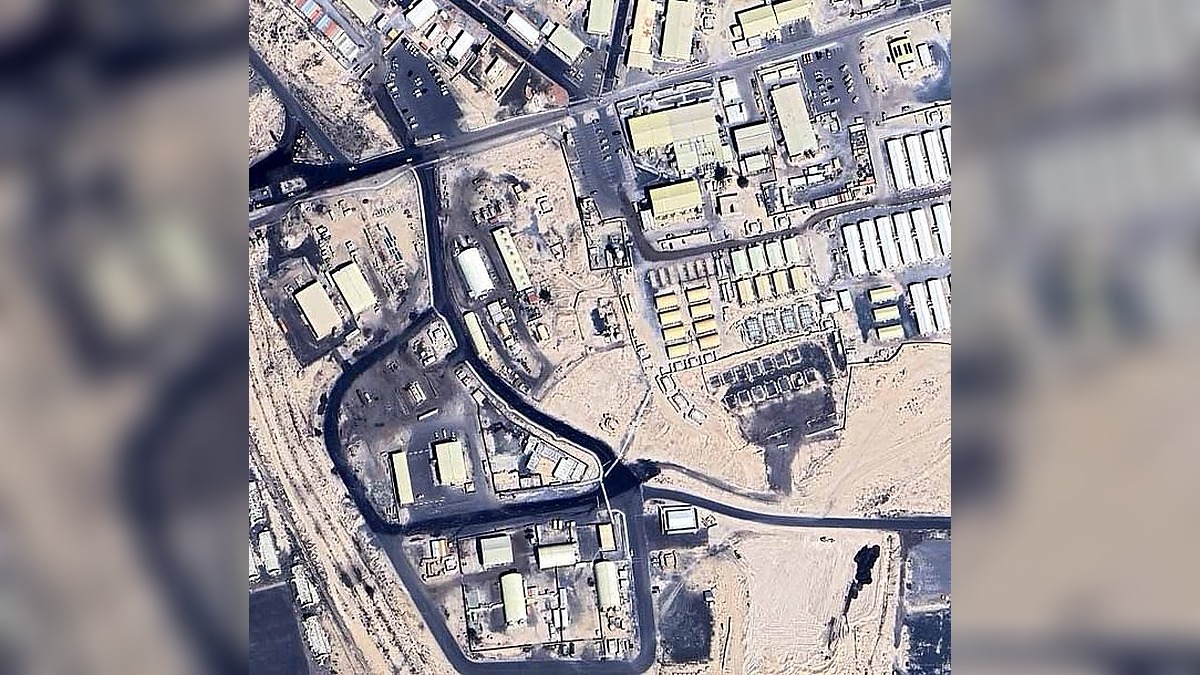
Several Americans have been injured following a ballistic missile strike attributed to Iran on a Kuwaiti military installation, in an incident that has sharply raised tensions in the Gulf and prompted warnings from US defense officials that forces are prepared to respond again if required.
The attack, which struck the Ali Al Salem air base in Kuwait, comes amid renewed accusations of ceasefire violations and growing instability in the region’s security environment.
Injuries Reported After Missile Debris Hits Strategic Air Base
According to sources cited by Bloomberg, five individuals — including both contractors and active-duty personnel — sustained minor injuries after the strike.
Although Kuwaiti air defenses successfully intercepted the incoming missile, debris reportedly fell onto the base, causing damage and injuries despite the interception.
Officials familiar with the incident described the situation as contained but serious, with emergency response teams deployed immediately following the impact.
Iranian Ballistic Missile Identified in the Attack
The missile used in the strike was identified as a Fateh-110 missile, a short-range system capable of reaching distances of up to 124 miles.
Military analysis suggests the weapon was launched as part of a broader pattern of repeated missile activity in the region. Data from the Center for Strategic and International Studies indicates Iran has launched more than 1,850 ballistic missiles since the beginning of the ongoing conflict.
The strike has intensified scrutiny over Iran’s missile capabilities and its expanding use of ballistic systems in regional confrontations.
Air Defense Engagement and Drone Losses During Interception
Reports indicate that Kuwait’s air defense network engaged the incoming missile using MQ-9 Reaper strike drones during the interception process. In the exchange, one drone was destroyed and another sustained severe damage.
The drones involved — each valued at approximately $30 million — are among the most advanced surveillance and strike platforms used by US-aligned forces in the region.
Despite interception efforts, debris from the missile reportedly still impacted the base, highlighting the difficulty of fully neutralizing fast-moving ballistic threats.
Strategic Importance of Ali Al Salem Air Base
The attack targeted the Ali Al Salem air base, a key US-Kuwaiti military installation located roughly 39 miles from the Iraqi border.
The facility, often referred to as “The Rock” due to its elevated position above the surrounding desert terrain, serves as a critical operational hub for regional military coordination and air operations.
Its strategic location has made it a frequent focal point in regional security planning, particularly during periods of heightened tension involving Iran and US forces.
Washington and Regional Response Amid Ceasefire Dispute
The incident has been described by US Central Command as an “egregious ceasefire violation,” while Kuwait’s Foreign Ministry has condemned the strike as “blatant aggression.”
Secretary of War Pete Hegseth stated that American forces remain on alert and are prepared to “recommence if necessary,” signaling the possibility of further military escalation depending on developments.
The US military has also accused Iran of breaching an existing ceasefire agreement referenced earlier this year, further complicating already fragile diplomatic conditions.
Investigation Continues as Regional Tensions Rise
The White House and Pentagon have not yet issued a formal public response to the latest reports, though inquiries are ongoing.
As investigations continue into the strike and its aftermath, the incident is being viewed as part of a broader pattern of escalating missile activity and contested ceasefire compliance across the region — with both military and diplomatic consequences still unfolding.